

Historically, Rhodes grass or Chloris gayana traces back to Africa, from where it was exported to the world for commercial agriculture in 1985. According to a journal from the Food and Agriculture Organization of the United Nations (FAO), Rhodes grass originated from the banks of the Zambesi River, in Zimbabwe. A highly adaptable grass genus, that is widespread in tropical and subtropical countries, Rhodes grass is drought resistant and very productive.
Rhodes grass is known to be productive for a period of three to four years, but this time frame can be extended slightly on account of its high seed production. However, care has to be taken to not overgraze or utilize it at its early stages, as it tends to die out.
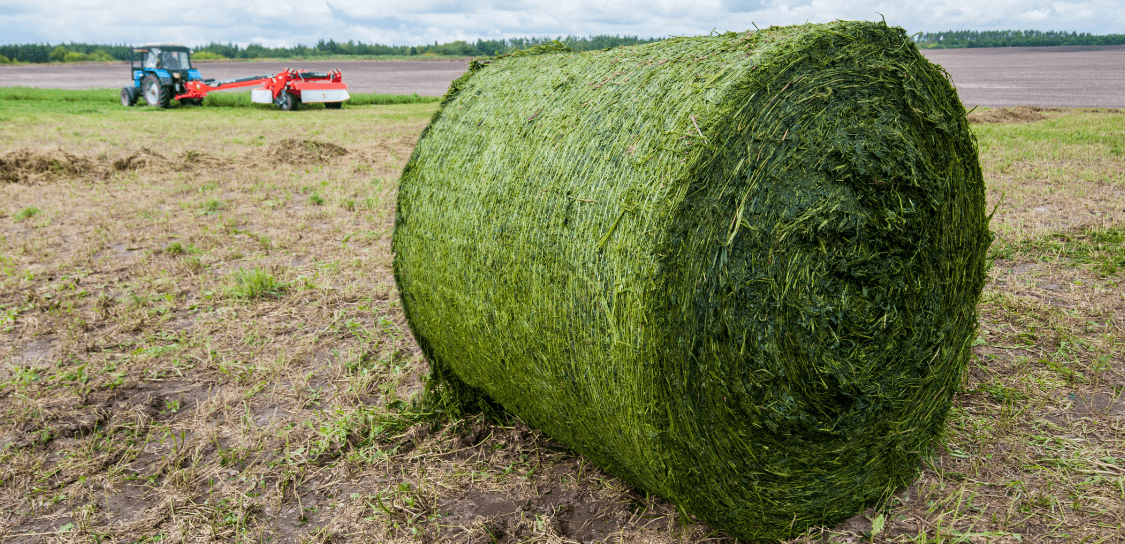
Rhodes grass is known to be productive for a period of three to four years, but this time frame can be extended slightly on account of its high seed production. However, care has to be taken to not overgraze or utilize it at its early stages, as it tends to die out.
Because of Rhodes grass’s ability to spread by ‘stolons’ or ‘runners’, it is often used to combat erosion. Equally, Rhodes grass is also used by farmers to control the growth of eelworms (nematodes). Both these characteristics make it a useful rotational crop for tobacco, tomato, potato, and pineapple farmers.
Alfalfa, (also known as lucerne or Medicago sativa), is cultivated as an important forage crop in many countries around the world. It is used for grazing, hay, and silage, as well as a green manure and cover crop. However, in recent years, increasing numbers of farmers are turning to Rhodes grass due to its high adaptability to many kinds of soils, quick growth cycle, and perineal usage, for the feeding and grazing of livestock. The nutritive value of Rhodes grass is high when the grass is young, therefore farmers have the added advantage of harvesting new growth monthly.
VARIETIES OF RHODES GRASS


.jpg )
